
War is fracturing: While monarchists cheer for it, others defend the war in the name of defending the homeland and resisting imperialism. A personal reckoning with belonging, resistance, and lost solidarity in exile.
As an Iranian feminist who has stood in both pro-Palestinian and pro-Kurdish rallies in Germany, I know causes, histories, and forms of violence might refuse to align neatly when seen through geopolitical lens. Yet watching the language of resistance claimed by people who stand behind a state that denies it to its own people has proven hard to bear.
“This is what war is—it doesn’t just kill people or destroy infrastructure. It ruins connections, dissolves communities, and shifts borders”, said Sally—my internet friend living in the US. Over the years in exile, I have been blessed with sharing a virtual home with feminists, activists, and co-visionaries across the world. Even that fragile refuge feels fractured, made more painful by the internet blackout in Iran, which has already cut us off from our loved ones in a country now being bombarded by war.
As the U.S.-Israeli military campaign continues to bombard Iran—its cities, infrastructure and energy lifelines, and its cultural heritage—I watch from afar, as an Iranian woman. The 17th‑century Chehel Sotoun Palace, Ali Qapu Palace, Masjed‑e Jameh mosque in Isfahan, the Golestan Palace in Tehran, and Falak‑ol‑Aflak Castle in Lorestan. These centuries-old monuments have become “collateral damage” in a conflict, as many watch in disbelief, rage, and hopelessness.
Divisions in the Diaspora
The Iranian diaspora was already deeply polarized before the war began—divided by politics, ideology, and memory. The U.S.-Israel war against Iran has only widened this schism, turning social networks into a contested and fractured space.
Some, including the son of Iran's last Shah, Reza Pahlavi has urged the U.S. and Israel to militarily intervene to hasten the fall of the regime; others argue that in order to uphold Iran’s resistance one has no choice but to defend the Islamic regime which is launching missiles toward Israel and U.S. bases across the region.
Any critical position is erased. To speak against the destruction of the war is treated as support for the regime. Many leftists, including those who endured years of prison and torture for their beliefs, are silenced or accused of complicity.
Iranians in the diaspora watch one another—who is sliding toward the regime, who celebrates war—while having no say in the fate of those inside Iran. What agency do we have? What remains of Diaspora Solidarity? A fragile “We” that stood united against the Israeli genocide in Gaza, against the deafening silence of the world facing the suffering of people in Palestine, Lebanon, and Syria under Israeli attacks, first shattered with positions on the massacre in early January by the Iranian regime and is now further divided by war, by silence, by positions we can no longer reconcile.
Scenes from the Homeland
In three months, I have watched videos of parents dancing on the graves of their children killed in the January 8–9, 2026 crackdowns—a refusal to be silenced—and families mourning more than 150 schoolchildren killed by U.S. strikes in Minab , at the Strait of Hormuz. People are pulled from rubbles across the country; grief repeats itself and does not wait for political clarity.
Meanwhile, outside Iran, some are dancing, chanting “Trump, we love you”, waving Israeli flags and using insults—to intimidate and humiliate those supporting the Islamic regime in Iran. Reza Pahlavi, the self-proclaimed leader of the transition from the Islamic regime, extends condolences to families of three American soldiers killed in the war, but not to the families of civilians.
Simultaneously, others are returning to Iran from the west to join what they call “the resistance”. Some upload videos from Tehran as the war and the internet blackout continue. A woman on Quds Day—an annual state‑organized demonstration expressing support for Palestine—wearing a keffiyeh, but no hijab—speaking in English to state media: “They have attacked our land, and we will make it IsraHell for them”.
The Illusion of Change from Within
Surprisingly, I too once stood at a Quds Day rally. It was in 2009, during the mass protests known as the Green Movement , when millions of Iranians took to the streets after the disputed presidential election. In that Quds Day rally, I wore a green armband and chanted the name of Mir Hossein Mousavi, the opposition candidate many believed had won. Like many others, I joined a state-sponsored, religious demonstration I would otherwise have avoided, because it offered one of the few spaces where dissent could still be voiced. It was a moment when people set aside their usual boundaries and convictions to be seen and heard.

That same pragmatism shaped the choice of Mousavi himself. As the last prime minister of Iran, he had held office during the 1980s, when thousands of my parents’ comrades were executed and the country was consumed by war with Iraq . And yet, in 2009, many rallied behind him as a vehicle for change. Supporting him meant overlooking a past that, under other circumstances, would have made him unacceptable. He has been under house arrest with his wife since February 2011. Time and again, political participation in Iran has required uneasy alliances, choices shaped less by conviction than by the limited, shifting possibilities for resistance.
With the economic and political situation deteriorating, waves of protests came after one another. And with each wave, something more was lost—not only lives, but the belief that change from within was still possible. I witnessed all of this from afar over the past eight years, living in Germany, unable to return since the Women, Life, Freedom uprising because of my activism. Distance was never a choice—it was imposed. Over time, however, I found people in the Iranian diaspora who shared my beliefs, the passion for justice, equality and dignity for all. War has reminded me of the pain of separation from a place, but also the suffering caused by unbelonging to a community.
Home as an Impossibility
Iran isn’t a land I could return to and be held by. Yes, there were places: Chehel Sotoun, Bisotun. Graffiti. Stories. Unmarked graves I know how to find. But is that enough for it to be my land?
I think of all those moments women were trying to escape a patrol, simply because a strand of her hair was showing, before Jina Mahsa Amini was killed in the “morality police” custody, only for women to be shown with the Iranian flag and the leaders’ photos with no hijab, indicating how moderate and liberal the state is in terms of freedoms. These are the conditions that shaped “home” long before the war began. But how can you call a place yours when your loved ones must flee the streets like criminals for something so small?
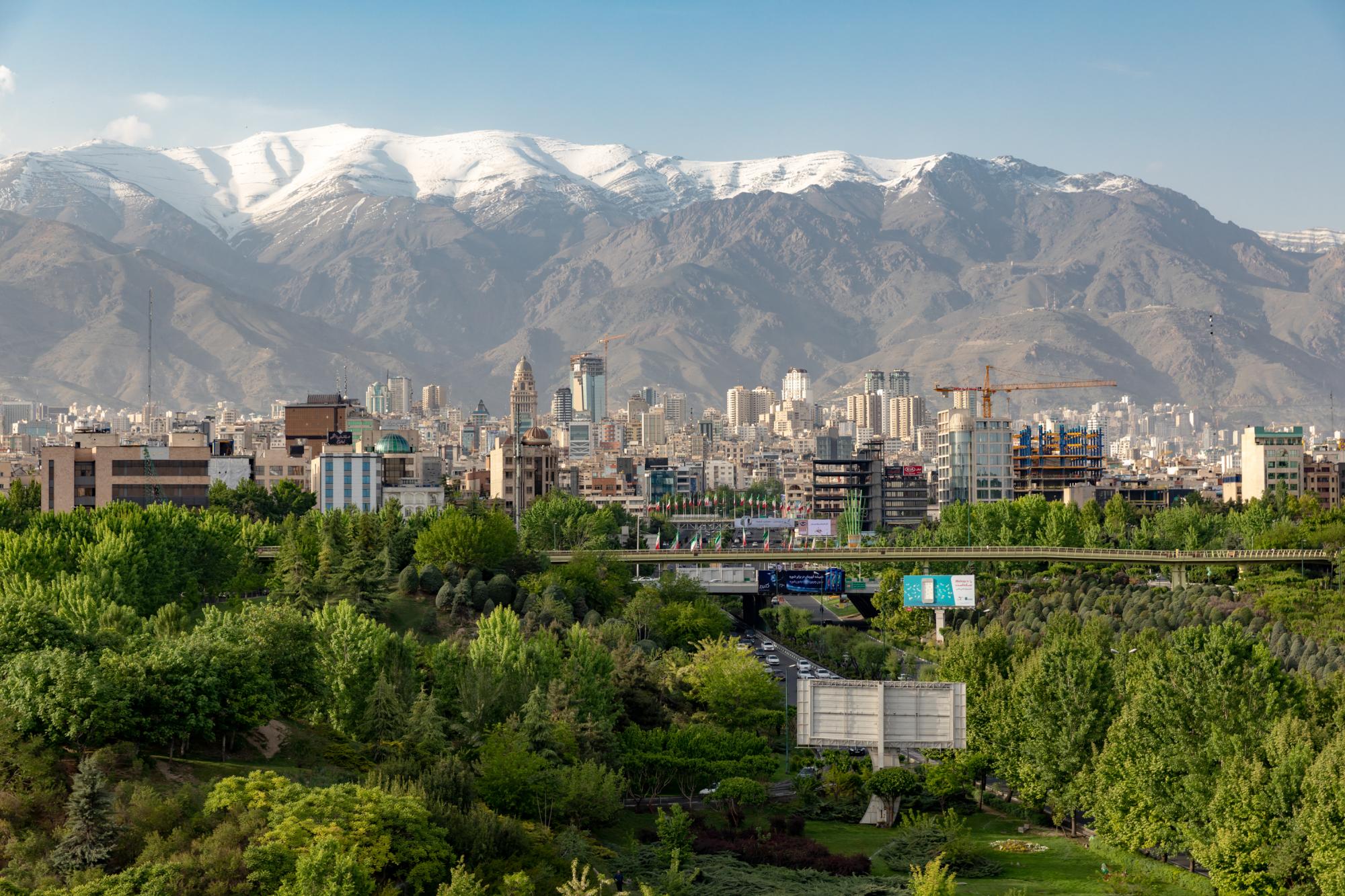
The Islamic Republic has already estranged me and many more from that land. And now, in the language of war, it ties the fate of a people and a country to its own survival – while others, from afar, call for destruction in the name of freedom as Israeli and U.S. bombs are falling on Iran.
A Refusal Instead of a Clear Position
Even the idea of having a land to call “ours” begins to feel like a privilege—one that not all of us have ever been granted. To ignore the massacres of January 2026 – not to mention decades of repression, imprisonment, and silencing—and to stand behind this state in the name of defending Iran or resisting imperialism, is to turn away from the very lives and dignity such a defense claims to protect.
Bombs do not liberate those streets. Sanctions do not protect those lives. Regimes that rule through fear do not embody the people they claim to defend.
What remains, then, is not a clear position, but a refusal:
a refusal of war in the name of liberation,
a refusal of massacre,
a refusal of a regime that has long denied its people dignity,
a refusal of sanctions that suffocate those already living on the edge
And perhaps, also, the quiet grief of losing a “We” that once felt possible.