Iranian dancers in exile struggle with the physical and emotional consequences of their time in the underground dance scene. The author weaves her own experiences with interviews, offering insights into hidden realities of Iranian dancers.
The phrase “Dance is illegal in Iran” raises countless questions for someone hearing it for the first time. Even for us as Iranian dancers, this reality has always been difficult to process as it seems obscure. However, despite dance being publicly illegal and strictly prohibited for women, we danced all the time. One dancer recalled: “Once a French classmate asked me: So, I don’t understand—if dance is forbidden, how did you learn? Where did you dance?” While the question seems simple, it is very complex to answer, and even harder to grasp for someone who is raised in Europe.
What role does dance play in resistance in Iran? To explore this question, I conducted interviews with 10 female dancers and activists, aged between 25 and 38. Two of them currently live in Iran, while the other ones have emigrated to different countries. It’s important to mention that three additional individuals declined to participate, citing security concerns due to past experiences or fear of potential consequences.
Dance in Post-Revolutionary Iran
“Raghs”, the Farsi word for dance, has always been an important part of Iranian culture. It was entangled into social gatherings, traditional ceremonies like Sufi practices and artistic expressions.
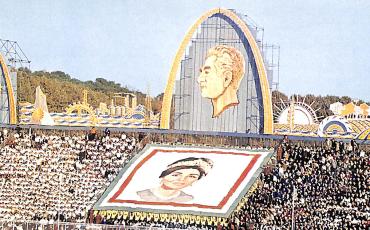
In the years leading up to the 1979 Islamic revolution, dance had increasingly become associated with cabaret performances, female entertainers, and a sense of eroticism. This clashed with the values of the new Islamic regime. The government sought to redefine—or erase—dance, portraying it as immoral and incompatible with Islamic principles. Music itself was labelled as morally corrupt, and as it was pushed out of public life, raghs disappeared with it.
In its place, a carefully rebranded form of performance emerged under the name harikat-imawzun (farsi for: rhythmic movements). This genre reframed bodily expression as modest, spiritual, and revolutionary, aligning it with the Islamic values of the new regime in Iran.
After the Islamic revolution, a deep divide between public and private life emerged. While people had once celebrated their traditions openly, forms of expressions that did not align with the norms and values of the Iranian regime could only survive behind closed doors. For many in my generation, hiding one’s passions, hobbies, and even the personal identity became essential for survival.
Voices From Underground to the Overground
Each of the ten participants of my fieldwork had been involved in dance for over five years, with many considering it a core part of their professional life or primary career. For most of the interviewed women including me, dance was either the main or one of the main reasons to flee abroad.
Throughout our conversations, and while reflecting on my own journey from Iran to Germany, I noticed recurring shifts that were common to all of our stories. While we all had different personal meanings associated with dancing, we realised that our perception of dance had changed since we no longer lived in Iran.
Although the repression onto our bodies was not part of our daily lives outside of Iran, our bodies often froze when we tried to dance. One dancer told me: “I couldn’t move, I felt sick for a week. My instructor told me: ‘Your body is locked.’” Another interviewee said: “I felt like I had a stroke.”
In my first months in Germany, I felt the same. I wondered: Fighting for my freedom to dance was such a hardship, yet once free, I had no desire to move. A dancer in Paris experienced a similar phenomenon and explained: “When I was in Iran, even dancing alone in a small studio, I felt like I was doing something—like an activist, not just a dancer.”
She was right the reason for this blockade was a certain disconnection from the meaning dance held for us back then in Iran, where dancing is more than movement. It is rather an act of resisting the suppressive and masculine society, where dance itself becomes a form of activism. Outside Iran, we encountered strange feelings of foreignness. Another interviewee told me: “While I was dancing, I wondered, what am I doing? This feels like nothing. I don’t want to do this.”
Constant Risk
One important reason for these feelings is that the struggles and the barriers we faced in Iran shaped both our bodies and our art. We used to dance in secret, turning the music volume down low, checking the door every five minutes to be sure the moral police could not hear us. We moved with our hearts beating fast, afraid that one of the neighbours might report us. We wore fake gym clothes to cover our dance outfits.
Once, after a performance in a theatre we withstood phone calls from the theatre security guards at six o’clock in the morning, feeling sick with panic. Our friends warned us to stay safe and begged us not to put ourselves at risk. Regardless, they encouraged us with their warm hugs. Then, back home, we all experienced arguments with our families. We begged for their support and insisted that dance was the only thing we wanted to live for.
Living a Double Life
Another dancer I interviewed compared dancing to the prohibition of alcohol in Iran: “It’s funny, drinking alcohol is illegal, but everybody drinks it all the time.” Many of us grew up so accustomed to living this double life underground that we did not realize how strange it would sound to outsiders. It was only after leaving Iran that we began to understand how difficult it would be to put this experience into words that others could comprehend.
This double life does not end with migration—it continues in the country of destination. One of the interviewed dancers told me: “It was only a week ago that my eyes had witnessed innocent people getting killed and being beaten, running and shouting. The sound of gunfire. Now my eyes and my body couldn’t accept people simply living their lives. Seeing others dance felt like a bullet in my heart. My body couldn’t handle the sight. Everything was back to normal here, while just days earlier I had been fighting for my life.”
One of the interviewed dancers called this experience a “battle” that happens between the world inside of the body, the mind, and the world outside in a different country. These two dimensions of daily life are so far apart that they leave you unable to tell which one is real—and which one is truly happening to you.
Dance as Resistance
All these games of hide-and-seek—sneaking into rusty studios just to practice for an hour—were the reason we became dancers in the first place. For us, dance was a form of resistance, a way of making a small, but meaningful change against the social norms that supressed us, in order to claim our presence as women in the Iranian society. This was the meaning of dance for us. Therefore dance, often seen as a simple or frivolous activity, becomes a political and social statement offering a path towards self-realization and enabling the rejection of governmental and societal oppression.
Abroad, it becomes an echo. Migration not only displaces this medium in spatial terms, but also in semantic and symbolic ones, unravelling the intensity of meaning that once made dance not only visible, but vital. As one interviewee poignantly reflected: “In Iran, when I danced, I felt like I was doing something. Here, I’m just moving.”
Through this lens, the act of dancing in Iran is emerging to be more than just a form of expression; it is rather a medium of resistance, an embodied politics that transcends the structural closures of the sociopolitical system.
Dance and Gender
Iranian women, in particular, are systematically oppressed by governmental regulations that dictate not only how they should dress but also limit how they can behave and interact in public. Through dance, women can reclaim ownership of their bodies, using movement as a form of resistance and protest.
Beyond protesting the government, it is also a means of confronting deeply ingrained traditional and patriarchal family structures and oppressive gender roles that seek to control women’s autonomy.
For many women, dance becomes a way to reclaim their identities, that are often stifled within the own home.
Through movement, Iranian women express their individuality, assert their freedom, and challenge the restrictive norms that have historically confined them, both physically and emotionally. In the Iranian context, dance is a bridge between personal freedom and public defiance; it is a way for individuals to reclaim their bodies and voices in the face of long-standing oppression.