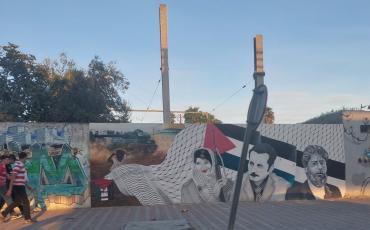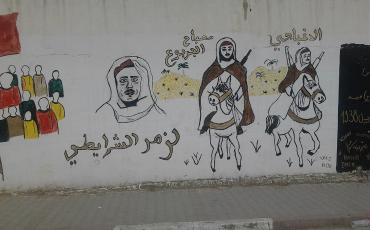

After 75 years of French colonialism, Tunisia gained independence in 1956. Beyond political negotiations, armed resistance played a key role: the Fellagha. Who were they, and why have they been forgotten?
The Treaty of Bardo in 1881, also known as the Treaty of Ksar Said, marked the beginning of the French protectorate over Tunisia. The agreement formally maintained Tunisian administration at the local level, but gave France almost total control over the North African country. Already that same year, armed resistance against French rule began.
Characterized by a strong disparity in power and resources, this first phase of resistance was rapidly suppressed by the French army. Additionally, in the 1920s and 1930s, a form of peaceful civil disobedience took hold, led by newly formed trade unions and political parties, such as the Destour Party, founded in 1924. It would become Neo-Destour a decade later.
Accordingly, in Tunisia – in contrast to Algeria, for example – armed struggle was not the primary means of fighting the colonizer. Rather, there was an interplay of political and armed militancy, with negotiation becoming the preferred method for achieving independence.
Who were the Fellagha?
The name Fellagha, stemming from the Arabic word al-Falāqa, meaning “bandit”, was a general term used by the French colonists to describe armed militants belonging to the independence movement. A derogatory term, it entered the French language around the beginning of World War I. It was then revived in the 1950s to refer to all nationalists engaged in the anticolonial struggle. Freed from the negative connotation imposed by the colonists, the term today refers to those who courageously fought against oppression, occupation, and injustice.
The Fellagha, mostly landless peasants or marginalized inhabitants from the rural and mountainous regions of Tunisia, were organized into small groups. They attempted to create a “National Liberation Army”, but according to Tunisian historian Amira Aleya Sghaïer, it would be pompous to speak of a real army ¬ — at least in the early stages of the struggle. Lacking the hierarchies, logistics, and arsenal that typically form the basis of an army, the Fellagha operated as armed groups. Each group was active in its own territory and therefore largely independent, only sporadically coordinating with one another.
They carried out small-scale guerrilla operations, often targeting French infrastructure such as electricity and communications lines. The aim of such operations was to inflict logistical damage on the occupying force. Since French presence was weaker in the rural and mountainous areas, the Fellagha often enjoyed the support of the local population, who provided them with hiding places, logistical assistance, and information.
The rise of armed resistance
Encouraged by the political climate of 1952, and partly thanks to collaborations with the Libyan and Algerian liberation movements, the armed struggle became more structured. Accordingly, the second phase of the Fellagha struggle can be identified in the years between 1952 and 1956, when they successfully organized themselves into a real army.
After failed negotiations with the French government led by Bourguiba and Ben Youssef, a new Resident General of France was inaugurated: Jean de Hauteclocque – known for his links to conservative French political circles rather than for his diplomatic skills – was sent to impose order, suppress the nationalists, and therefore prevent Tunisia's path towards autonomy and independence.
Following Bourguiba's national tour, in which he called on the population to take part in the resistance, the Resident General banned the Neo-Destour Party’s National Congress. Hundreds of its members were arrested, including Bourguiba himself. These arrests incited uprisings and hardened the opposition to the French throughout the country.
Even as resistance resumed in 1952, after the widespread wave of repression against the civilian Neo-Destour Party, no direct links were established with the armed movement. The main trigger for continuing resistance was a political atmosphere marked by strong repression, especially in the cities, which forced many resistance fighters to move to the countryside.
A controversial compromise
In 1954, with the arrival of the French Prime Minister Pierre Mendès-France, a more conciliatory policy was adopted. Concerned that the Fellagha insurgency could transform Tunisia into another Indochina, the French Prime Minister chose to initiate negotiations with Bourguiba. On June 3rd, 1955, a political compromise was reached: Tunisia would govern itself, but France would continue to exercise its power and influence by retaining control over key sectors such as defence and foreign affairs.
This compromise divided Tunisia into two factions: one faction was led by future president and co-founder of the Neo-Destour party, Habib Bourguiba; on the other side, a more radical faction was led by Salah Ben Youssef, another prominent member of the party. The latter clashed with Bourguiba and his followers because they demanded a total independence – not just independence in internal affairs. In response to Ben Youssef's criticism that this type of independence “was not worth a single drop of Tunisian blood,” Bourguiba replied with the slogan “incomplete independence is better than total slavery.”
The Fellagha after independence: between repression and denied recognition
On March 20, 1956, the “independence protocol” was signed: France granted independence – with the exception of Bizerte and its strategic port, which was only abandoned in 1963 – under the infamous formula coined by then prime minister Edgar Faure: “Independence through interdependence.”
After the declaration of independence, some groups of Fellagha laid down their arms and entered the administrative bodies of Tunisia. Others continued to fight against the French military units remaining in the country. Many fighters based in southern Tunisia offered their support to the Algerian liberation movement. In response to the fact that some of the Fellagha continued to fight against French units, thereby risking the independence that had just been achieved, Bourguiba began to publicly downplay their role in liberation: The Neo-Destourian press tried to present the Fellagha in an unfavourable light with some of the Fellagha even becoming the target of condemnation and repression, as they were considered to be supporters of Ben Youssef. Many of their leaders were executed and tortured in various trials over the years.
Accordingly, a lot of them felt that Bourguiba had used them for his political ends. Many of the Fellagha who fought for independence therefore never received official recognition. Up until today, their sacrifices are not part of the official narrative around Tunisia’s struggle for independence and often remain forgotten.