
The Moroccan Gen Z 212-movement protests to demand urgent healthcare reforms, criticizing the government for prioritizing World Cup spending instead. Peaceful demonstrations have now escalated into deadly clashes in the streets.
The rage of the Moroccan youth, organized anonymously under the name Gen Z 212 (referencing the nation's phone code), was already at a breaking point due to the youth unemployment rate exceeding 35 percent in the second quarter of 2025. However, a humanitarian incident in the southern region, Massa, triggered the protests all over Morocco in late September 2025: Reports surfaced that several women died at the public hospital in Agadir while they were allegedly denied critical care. Forced to wait, they ultimately passed because they were not treated. This event channelled broad frustration with failing public services and led to the public organizing and appearance of the popular movement in Moroccan streets; their protests are pursuing the quest to end corruption, improve the education system, and ensure decent living conditions for all.
A dignified life is not a priority
“Healthcare comes first, we don’t want the World Cup” protesters chanted during the demonstrations, pointing to the deaths of the women in Agadir as glaring evidence of a systemic distortion in the government’s priorities: billions of U.S. dollars spent on building stadiums and event infrastructure for the 2025 African Cup of Nations (CAN) and the 2030 football World Cup, yet failing to provide basic healthcare for its citizens. For Moroccan youth, the situation in Agadir was an obvious illustration of the neglect of marginalized populations.
Rural communities were already well aware of that reality for years: Up to this day, the government has failed to fully rehouse the victims of the severe earthquake that struck the Al Haouz region in 2023, which left many living in tents. A few hundred kilometers west, in the heart of the High Atlas Mountains, the peaceful march of Aït Bougmez in early July 2025 revealed the frustration with persistent underdevelopment. The protesters demanded a full-time resident doctor, passable roads, and telephone connectivity, exposing the non-accessibility to public services in regions that seem like blind spots to the government. Chants in the streets of Aït Bougmez drew a direct link between the healthcare crisis and the government's chronic failure to guarantee people's dignity.
From peaceful public protests to state violence
The Gen Z 212-movement that leads the current protests primarily operates via Discord and firmly asserted its commitment to peaceful protests. Yet, after taking to the streets, the protests were often violently escalated by police, when they opened fire on demonstrators. The rallies that followed the Agadir hospital crisis extended to other cities and their surrounding areas, promptly altering the dynamics, particularly in underdeveloped areas such as Lqliâa, near Agadir.
Local authorities in Lqliâa reported that security forces used firepower after a group, described as “armed people” by the authorities, stormed the local headquarters of the Royal Gendarmerie. At least two civilians were killed in this clash. Similarly, in Oujda, a young man was reportedly critically injured after being run over by a police van, resulting in the need for a leg amputation. This violence is not represented in government figures, which emphasizes the damage to government institutions and violence against state personnel.
Chaos management and communication
The decentralized and leaderless approach of the movement, which was an important factor in preventing the co-optation of key protesters, is now a challenge in coordinating street actions. Footage of clashes between civilians and armed police and violence by protesters, including inciting fires and throwing rocks, is widely shared and could potentially overshadow the democratic appeals that came from peaceful protesters. Some of Gen Z 212's anonymous coordinators soon had to put out public statements firmly condemning the violence and vandalism, also from protesters. They perceived each violent incident as a possible pretext to arrest civilians and discredit their battle for anti-corruption constitutional reform.
The struggle between the affirmation of democratic protests and the defamation of unjust violence reflects a profound societal strain. E. Fatima, a 22-year-old university student who actively supports the protests in central Rabat, expressed the movement's challenging stance: "We have the right to protest, but we also have a responsibility to defend our message. Our goal is to promote anti-corruption constitutional changes, but every violent episode offers the authorities an opportunity to arrest and discredit us. We fight against the government, not the police."
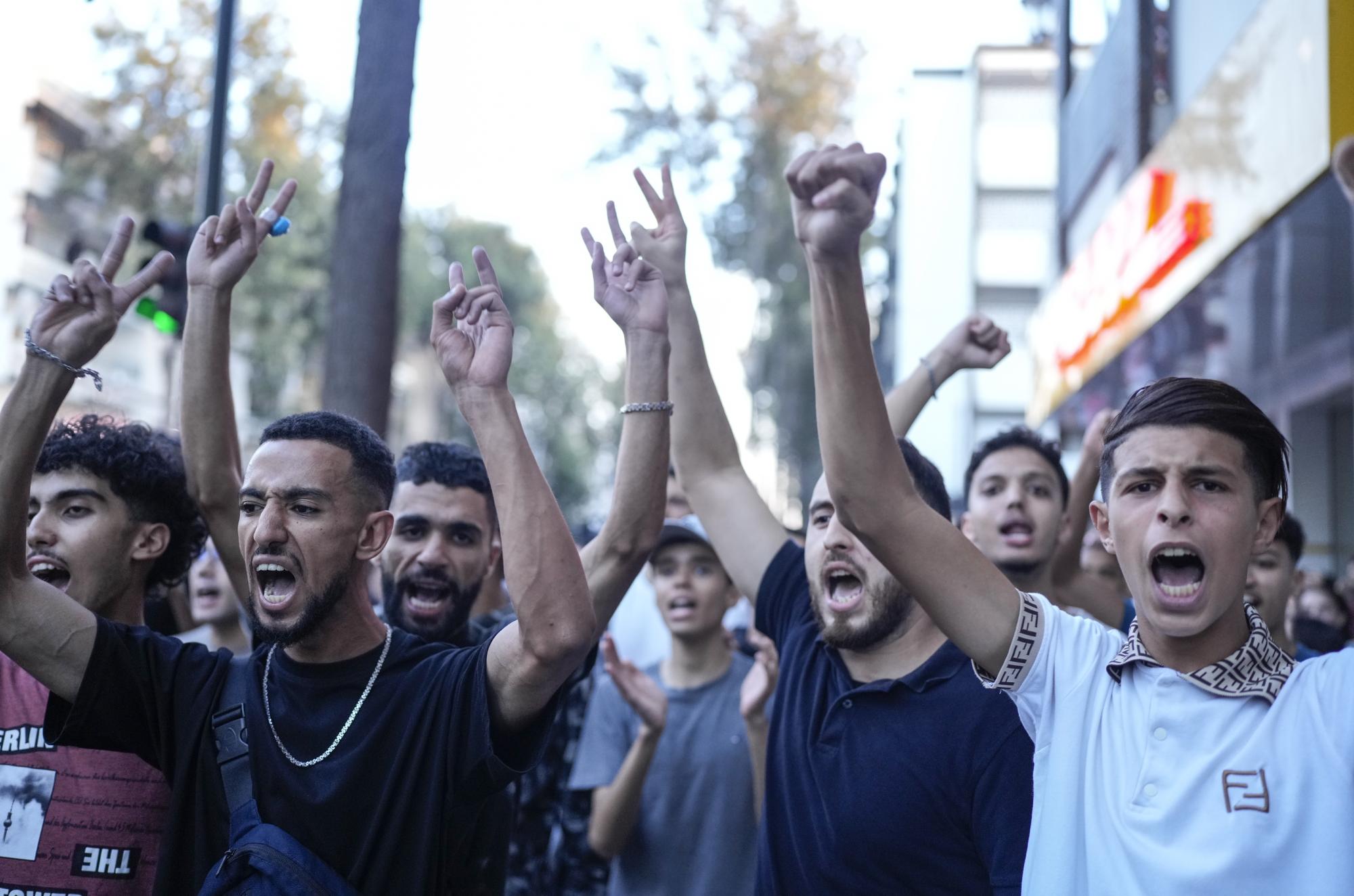
As for referring to the fear of losing momentum and the risks of being discredited, an anonymous Gen Z 212 supporter explained to us his strategy of appealing to politicians: "The true route to changing anything within the government is to make our voices heard during elections, by trusting experienced politicians or leaders to help us make changes. Egos aside, trust the good side of politics, and educate people: Don't vote for parties because they give you cash. Vote because you are aware of their advocacy."
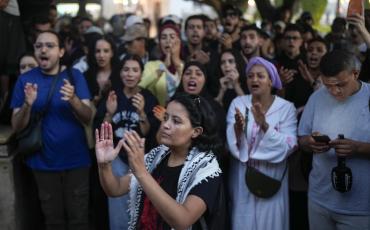
While Morocco's king is the country's highest political authority, the protests were primarily directed at the government, accusing it of corruption. On Thursday, October 2, thousands of people gathered in the capital, Rabat, to protest peacefully, chanting slogans calling on His Majesty King Mohammed VI to intervene and remove the government. The crowd shouted, “The people want Akhannouch and his government out!” and “The people want an end to corruption!”.
Government responds with “public safety”
Prime Minister Aziz Akhannouch's government opted for a dual approach: on the one hand, it issued a statement saying that the government is “open to dialogue”, while on the other hand, it led a wave of arrests and implemented a “security-driven policy”. Human rights groups, including the Moroccan Association for Human Rights (AMDH), condemned the excessive use of force and urged the immediate release of those who were detained while peacefully protesting.
The repression furthered the protesters' narrative that the government prioritized “public order” and international image at the expense of social reform. The violence, combined with the widespread neglect embodied by the deaths in Agadir, the shootings in Lqliâa, and the unmet needs in Al Haouz, demonstrated to Moroccan youth that “their lives mattered less than the spectacle of the World Cup,” as prominent Gen Z 212-members summarized in their statements. A banner held by a group of football ultras in Casablanca echoed the main critique of the people: “No education, no doctors, and good luck to the poor and their families.”
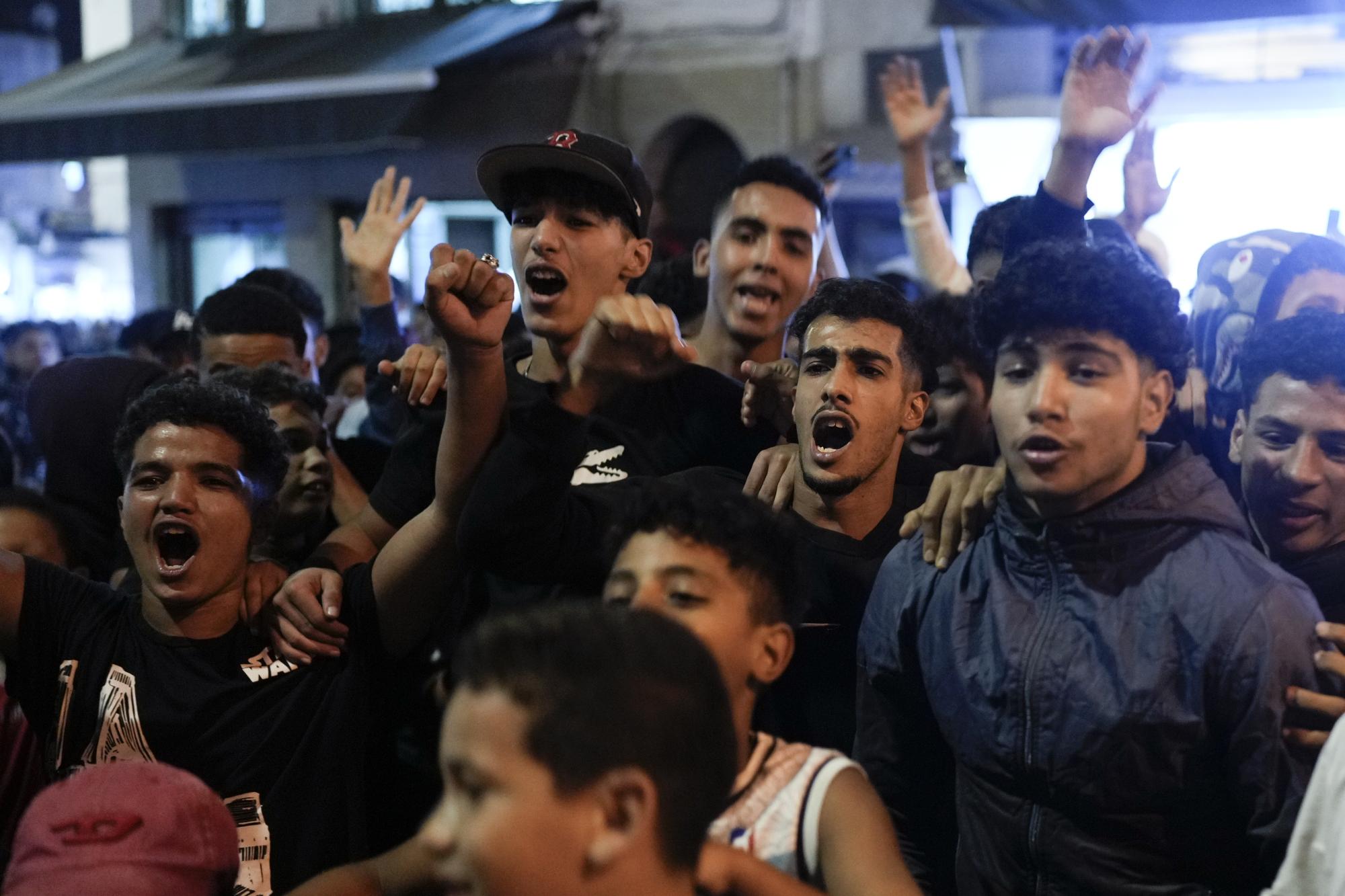
The protest continues until today, bound by the core demand to end corruption, an aim that analysts say requires the removal of most, if not all, current government figures. However, government officials working with Prime Minister Akhannouch, such as Mohamed Mehdi Bensaid, Minister of Youth, Culture and Communication of Morocco, continue to assure the public of "their willingness to engage in dialogue and explore solutions". Yet, this openness to dialogue is facing a huge obstacle: the Gen Z 212 movement is leaderless, organized entirely through Discord and other social media platforms, leaving no one at the negotiating table. Thus, a difficult political situation presents itself, between a rage with no face, demanding democratic reforms, and a government that refuses to give up its power.
With unrest spreading and public frustration growing over the government’s choice to spend billions on the World Cup while neglecting healthcare and education, a critical question hangs over Morocco’s future: five years from today, will Moroccans be celebrating a successful World Cup, or will the “crisis of priorities” eventually oblige a new government to deliver on promises of justice and dignity?