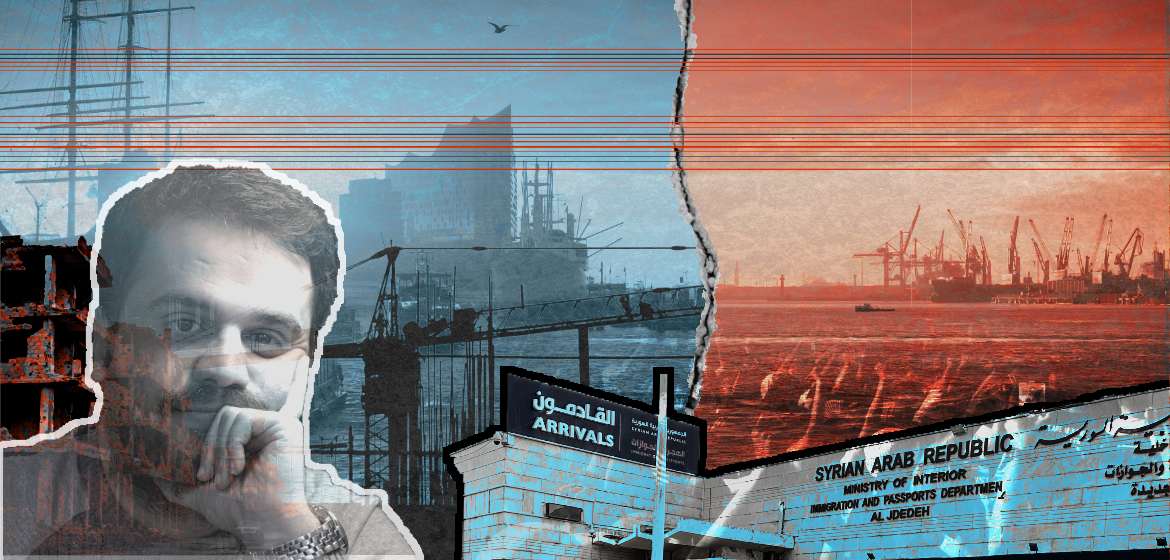
In 2015, Syrian journalist Hussam al-Zaher urged: "Talk with us, not about us." Yet German Chancellor Friedrich Merz's ignores the realities faced by Syrians living in Germany by claiming that 80% of Syrians should return. A response.
Salam,
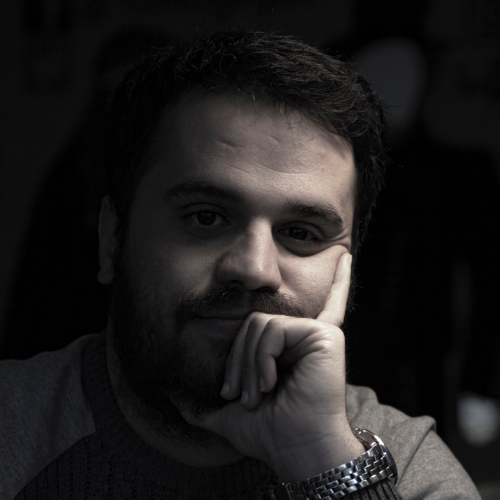
I am one of around 890,000 people who came to Germany as refugees from Syria in 2015. From the very beginning, one question has driven me: How do we start a conversation? I was fortunate to arrive in Hamburg, where I quickly connected with Germans—first through Facebook, and later in person.
I wanted to do more than build relationships within my own circle; I wanted to create a lasting space for dialogue. In 2018, together with many others, I co-founded kohero magazine, a media platform by and for people with migrant and refugee backgrounds. Kohero amplifies perspectives that remain underrepresented in the German media landscape. Our goal is not to have others talk about people like us from a distance, but to ensure that our own voices and experiences are part of the conversation.
When Germans now demand that as many Syrians as possible return to Syria as quickly as possible, they not only misunderstand the realities of our shared society, but also risk repeating the mistakes of the past. Let me explain why.
The fall of Assad did not heal all wounds
The fall of Assad was an indescribable moment. For me, and for everyone affected by Syria's dictatorial rule and by the war that our government waged against the Syrian people from 2011 with the support of Iran, Russia and Hezbollah, it still feels unbelievable today.
War, the loss of our loved ones and the loss of our home have inflicted deep pain on us Syrians. We all carry a deep emotional wound inside us, one that even Assad's fall cannot heal overnight. It still hurts us today.
What has changed with his fall, though, are our feelings for our country. The end of the Assad era gave us back our homeland and, with it, a sense of pride in Syria. For a long time, we felt only shame, because Syria was so often associated with war, pain, refugees, "illegal" migration and alleged crimes. With that pride came the big question: do I want to return to Syria to help rebuild the country? And if so, would I be able to do it?
The foreign has become (more) familiar
Even though my first answer to that question is “yes”, I have worked very hard over the past ten years in Germany to build a new life for myself here. I have created a new home and developed new prospects for the future.
At the same time, fleeing came at a great cost. We lost our sense of belonging to Syria. Family members and friends died or disappeared during the war. To this day, their fate remains unknown. I also lost the backdrop to my childhood memories: my home, my street, my school, my world.
"Lost” isn’t quite the right word. Because the memories remain and weigh heavily on me. They are memories full of pain, homesickness and “language-sickness.” That word occured to me when I realised how much I missed the Arabic language after arriving in Germany. I missed the conversations, the ease of speaking, the exchanges. These stories of pain and loss, as well as the long process of building a life in a new society, cannot simply be left behind in order to go back to Syria.
And the familiar becomes (even) more foreign
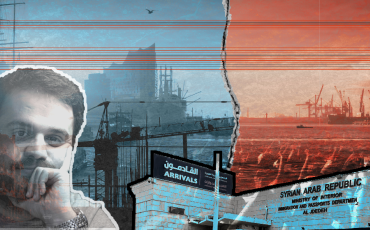
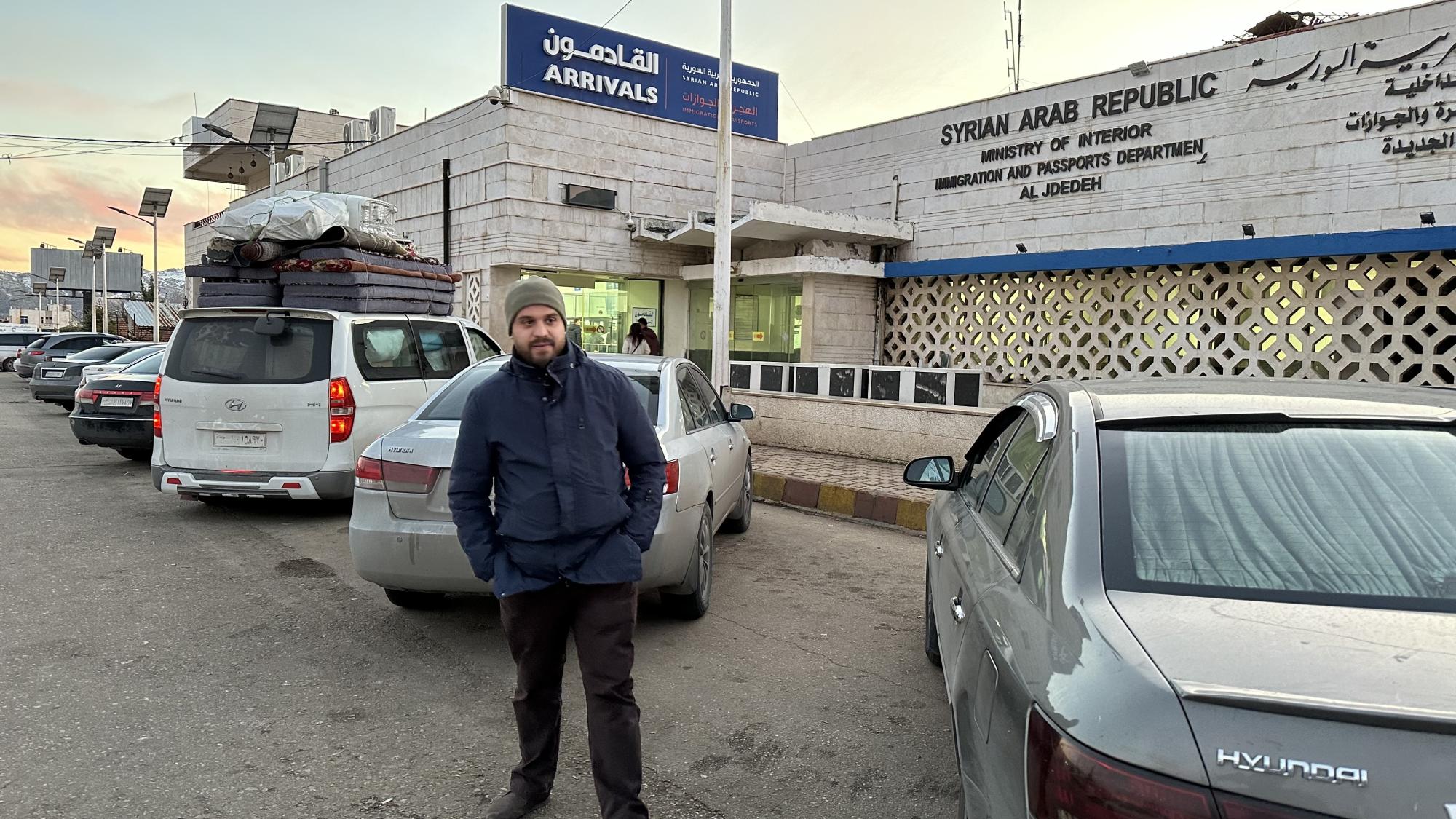
In February 2025, I traveled to Syria for the first time in nearly eleven years. I had imagined what it would be like to return home and find it just as I remembered it. I was going to be reunited with my family, who I hadn't seen since 2014. It felt like stepping back in time. But when I arrived, I found a home that had been completely transformed. Our apartment had been partially destroyed by the war.
Along with the building, the memories tied to it seemed to have vanished as well. Everything was simply gone: those moments from my first days of school, the books I had collected bit by bit, pictures from my childhood, my ugly drawings, my poems that I believed would change the world. The bay window where I used to play with my friends and siblings, study for exams and share meals with my family lived on in my mind through all those years in Germany. But it no longer existed. Some of my friends had died. Familiar faces from my neighborhood had disappeared as well. Children whose faces I once knew were now adults.
We can renovate the house, but the home of my memories will not return. The journey from the year 2025 back to 2011 was quick: from Hamburg via Düsseldorf to Beirut and from there to Damascus. On this short journey, time caught up with me and showed me that 2011 is irrevocably gone, the year in which I hoped, dreamed and believed.
Pain divides us instead of uniting us
After Assad's fall, there was great joy. But within a few weeks—or at the latest, after a few months—many people came to realise that although Assad was gone, he had left behind a difficult legacy that Syria will suffer from for years to come.
That legacy is made up not only of the dead and the tortured, or of a shattered society. It also includes deep divisions among Syrians: between those who stayed and those who went into exile; between those who lived in areas controlled by opposition groups and those under the regime; and between people from different cities and regions.
During the years of oppression and war, everyone had different experiences that we as a society can hardly bear together. How can we build a shared future with such diverse memories and so much pain? The challenge lies not only in the destroyed infrastructure or the economic situation, but above all in the loss of a shared memory, and in the individual pain felt by each and every person.
Even before Assad’s fall, there was no single truth in Syria, but rather many different truths. Who was the perpetrator and who was the victim? Who bore responsibility and who suffered personally? It is precisely because of this ambiguity that the search for facts is so difficult, yet so important.
In order to shape Syria’s present and future, we must address the past. What forms of suffering did Syrians experience under the Assad regime? What individual and collective losses did they have to endure? Only when these experiences are acknowledged and addressed can a shared understanding of history emerge.
Following the regime’s fall, new tensions and waves of violence have emerged, such as the massacres of the Alawite and Druze communities. Yet most people acknowledge only their own pain, not that of others. This further fuels the conflict and poses the greatest danger to society.
Returning would mean a new beginning
I’d like to help rebuild Syria. But how can I rebuild a country I barely recognise anymore?
My life and career are now centered in Germany. If I were to return to Syria, I’d have to rebuild from the ground up. I wonder if I have the strength to do that. This is especially true for the many Syrians who started families in their new homes, sometimes with people from other countries. For spouses and children, Syria would be a completely unfamiliar country.
Even if someone is emotionally ready to return, there are many obstacles on the ground. Take the education system: more than 7,000 schools have been destroyed and many others are overcrowded with classes of 40 or 50 children. There is a shortage of teachers and resources; there aren’t enough chairs, and often no heating. Sometimes even doors and windows are missing. Most parents don’t want to subject their children to this. The situation isn’t much better after school either: youth unemployment stands at about 69 percent.
Overall, Syria needs an almost unimaginable amount of money for reconstruction. Even though countries like Germany are supporting the process, providing around 200 million euros in 2026 alone for health care and water infrastructure, it is nowhere near enough. The idea that the majority of Syrians might leave Germany in the coming years reflects a lack of understanding about us and the situation in Syria.
Today’s Syrians are the guest workers of the past
Germany should change its perspective on us Syrians. The debate must not revolve solely around repatriation; it must finally acknowledge how much these people have built here, often under difficult conditions. Of course, many Syrians will return to Syria if they choose to. No one is arguing that all Syrians want to stay in Germany permanently.
But many Syrians have long since become part of this society: as doctors, skilled tradespeople, journalists, students and neighbours. They are active in political parties, cultural centers and clubs. They work as bus, train, or truck drivers and in many other professions. They have built networks, started businesses and raised families. They contribute to life in this country every day. Yet political and public discourse lacks respect for their achievements.
Germany should have learned from its history with so-called "guest workers". You can’t simply send people back once they’ve long since become part of society. That would be a loss to society. When Germany constantly talks about return, it builds walls and creates parallel societies; it pushes people out of society. After all, how are we supposed to continue feeling connected to a country that constantly questions our right to exist?
Yet Germany's welcoming culture was one of the key reasons why so many Syrians were able to build new lives and find their place in German society. It fostered trust and created the conditions for belonging. Welcoming refugees was therefore more than an act of humanitarian solidarity; it was also an investment in the future. That is true not only for Syrians, but for people from many other countries.
Germany should stop viewing Syria solely as a war zone. In the future, Syria could play an important economic, cultural and geopolitical role, for Germany and for Europe more broadly. In the long run, Germany will benefit if the Syrians who made their lives here can serve as bridges between their country of origin and their new home, through investment, education, language, culture and partnerships.
Perhaps one day German schools, universities or cafés will open in Syria. Perhaps people there will learn German not to leave, but to build connections. Because in the end, what endures are the relationships people build with one another.