Representatives of European universities gather in Istanbul this week, invited by the European University Association. Turkish academics, purged and exiled for resisting the oppression in Turkey, feel betrayed. Our author is one of them.
Today and tomorrow, April 16/17, the European University Association holds its Annual Conference. I was astonished to learn that this conference is held at a university in Turkey. I can assure you that hundreds of other purged scholars share my profound astonishment.
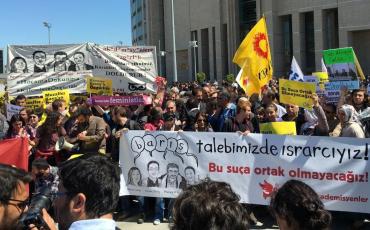
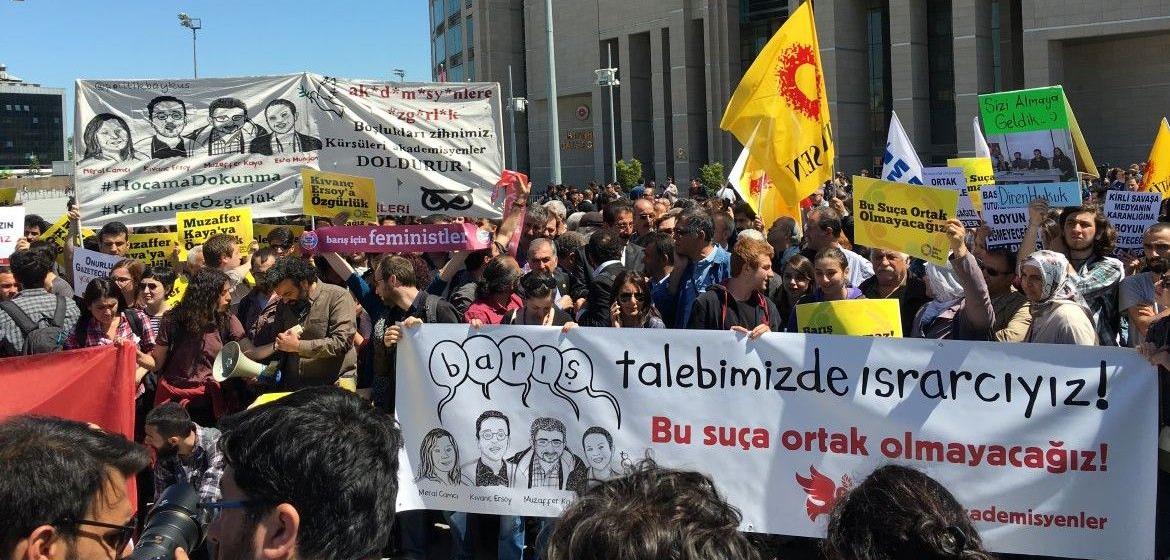
Ten years ago, I was a well-established professor, but my career was soon to be terminated. I was one of those academics who had signed a peace manifesto in January 2016, criticizing the state’s attacks on predominantly Kurdish cities in the South East of Turkey. My qualifications, my dedication, my service to the public did not matter. After a sham investigation, the university administration fired me. I was told that I had committed a very serious offense: Demanding peace was my offense!
The same university administration asked the government to ban me from public service for life via a decree. My career in Turkey was terminated. Academics who signed the manifesto, collectively known as Academics for Peace (Barış İçin Akademisyenler), were all branded “enemies of the state”. Hundreds of academics were banned from public service by similar decrees. In each case, the university administration sent an expulsion request. One university administration after another colluded with this authoritarian regime. Never in Turkey’s history had such a purge taken place.
The fight against our unlawful dismissal
Academics for Peace were ruthlessly blacklisted. They could not leave because their passports were revoked. Spouses, too, had their passports revoked. Taking a spouse as hostage was an effective way to make the dismissed academics, already in exile, return to Turkey.
These purges were all unlawful and could be challenged in administrative courts. The regime invented ways to delay such challenges for years. Many of us took the university administration to court in 2022, as the Constitutional Court had decided in July 2019 that the peace manifesto we had signed had to be considered under freedom of expression.
Nobody expected quick or fair decisions because the courts were under control of the regime. In my case, the court still decided that the decision to expel me from public service was unlawful. The university administration appealed. This appeal was rejected. The university appealed again and my case was sent to the highest administrative court (Danıştay).
Danıştay conducts a desk review of the legal proceedings and decides whether a case has been properly processed. Academics for Peace, however, receive a much different treatment: Danıştay is now conducting its own investigations. Academics for Peace are still being treated as “enemies of the state”.
Most universities in Turkey actively participated in the injustice
It has been almost ten years since we, as Academics for Peace, were blacklisted and then purged. In each case, the purge was made possible by a university administration. To this day, university administrations continue to demand unlawful lifetime bans against us.
This week, the European University Association holds its 2026 Annual Conference in Istanbul. At the conference, nobody will talk about how academics in Turkey were purged with the active participation of the university administrations. Nobody will mention the following facts regarding the state of higher education in Turkey:
- There is no academic freedom.
- The regime has eliminated even the slightest remnant of academic autonomy in 2016, when the president was given powers to appoint university rectors. This decision was later deemed unconstitutional, but the practice continues to this date.
- The regime has turned university administrations into its pawns.
- The regime has been engaged in an overt campaign to purge two prominent public universities, namely Boğaziçi University and Middle East Technical University, by forcing these two universities to their knees.
Let’s be clear: Holding this conference in Turkey despite these facts defies the very ideals of academic freedom and of academic autonomy. Holding this conference in a setting marked by purges and injustices is a form of endorsement. This is simply unacceptable.
Academic freedom and academic autonomy are both under attack across the world. The European University Association appears to have lost its direction and needs to be held accountable.